Honminoshi: Traditional Japanese Washi Paper with a 1300-Year History
Read this article in
Contents
Attractions and Characteristics of Honminoshi
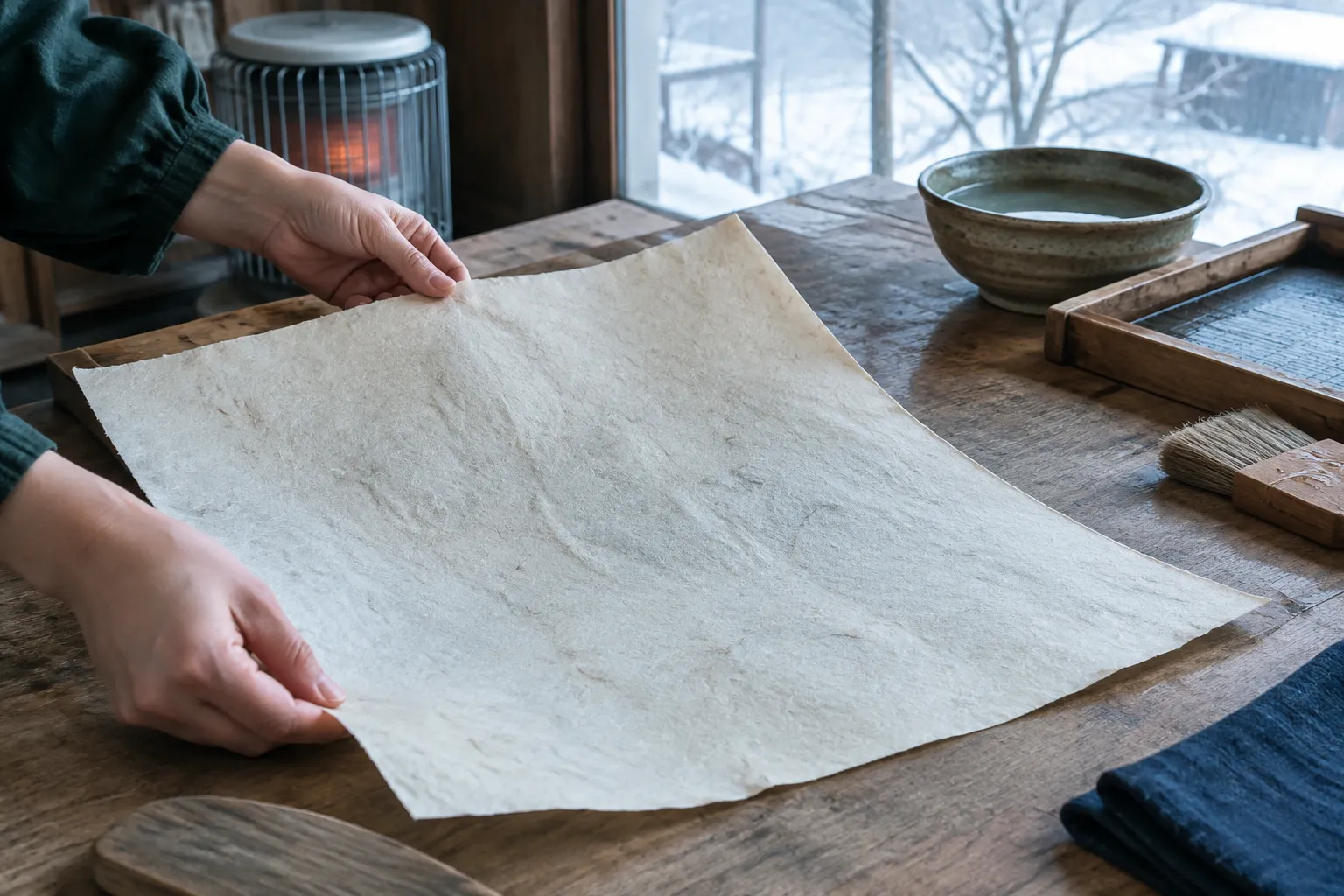
Honminoshi is a washi paper characterized by its white and beautiful color and a soft yet strong texture. The fibers are uniformly intertwined, giving it a unique feel. When held up to the light, the orderly combination of fibers becomes visible, highlighting its beauty.
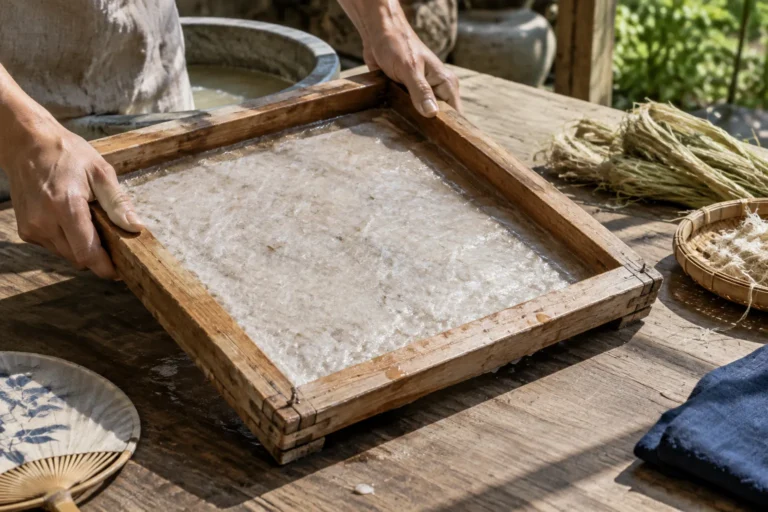
This washi paper uses the pure water of the Itadori River, a tributary of the Nagara River, and the highest quality Daigo Nasu Kozo (paper mulberry) from Ibaraki Prefecture as raw materials. Traditional tools such as Kiso cypress and hard brass papermaking frames, and bamboo slat screens are used in production, employing a complex papermaking technique combining vertical and horizontal shaking to arrange the fibers.
History and Cultural Background
Honminoshi has a history of over 1300 years and is known as one of Japan’s oldest papers. Paper made in Mino Province (present-day southern Gifu Prefecture) for family registers during the Taihō Code era (702) of the Nara period is preserved at the Shōsōin.
From the medieval period onward, Mino paper appears in many documents, with diverse papers produced regionally and technological development advancing. In the Edo period, it was valued as high-grade shoji paper, standardized as “Mino size” for shoji screens, and used as official paper by the shogunate.
Manufacturing Method and Materials
The raw material of Honminoshi is only kozo, and it is handmade using traditional methods and tools. The white bark is processed, and cooking uses plant ash or soda ash without chemical bleaching or additives.
Pulp beating is done by hand or equivalent methods, and papermaking is finished with a mixture using tororo aoi and a bamboo screen for the flow process. Drying is done by board drying, preserving the traditional color and texture.
Production Area and Preservation Organizations
Honminoshi is mainly produced in the Makiya district of Mino City, Gifu Prefecture, preserving a tradition that has continued for over 1300 years.
Designated as an Important Intangible Cultural Property in 1969, the manufacturing techniques are maintained by the Honminoshi Preservation Society. Only members of this society are permitted to make Honminoshi, working to pass down traditional techniques.
Points of Contact for Visits and Purchases
For detailed information about Honminoshi’s traditional techniques and products, it is recommended to refer to Mino City’s official page and the Honminoshi Preservation Society’s information.
The Preservation Society has multiple workshops whose addresses and contact details are published. When visiting or purchasing, it is advisable to check official information and understand the latest situation.
Explanation for Overseas Readers
Honminoshi is one of Japan’s traditional washi papers with a particularly deep history, embodying techniques and culture passed down for over 1300 years. Made in Mino City, Gifu Prefecture, this washi uses natural materials and traditional handcrafting methods, and is used in modern crafts and architecture.
For overseas enthusiasts of crafts and design, Honminoshi is a valuable example of Japan’s delicate handwork and the beauty of natural materials. When visiting, utilizing facilities and Preservation Society guides to learn about the manufacturing process and history will deepen understanding.
When considering purchase, obtaining it through workshops of Preservation Society members who protect traditional techniques is reliable. Understanding the characteristics and uses of washi allows you to enjoy its beauty and function for a long time.
出典
- 本美濃紙とは(2026年11月8日確認)
Related Links
Related articles
Features and Appeal of Yokkaichi Banko Ware
Yokkaichi Banko Ware …