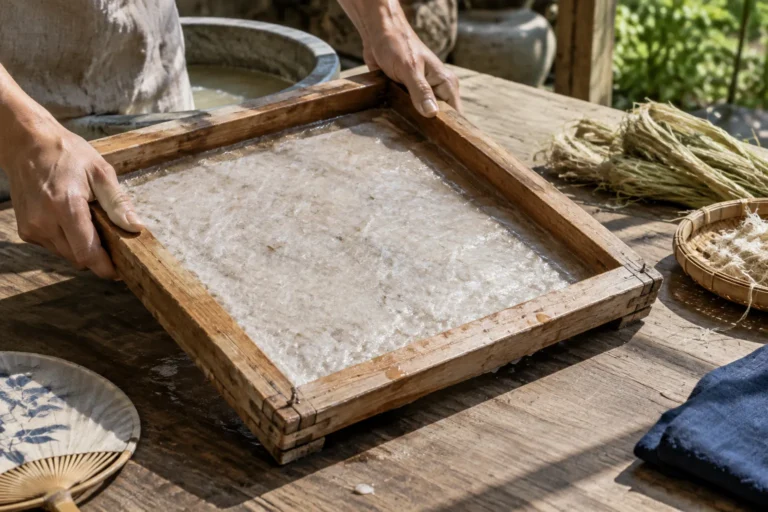
The History and Charm of Mino Paper: Background and Techniques of Traditional Japanese Washi Paper Making
Read this article in
Contents
The Charm and Characteristics of Mino Paper
Mino paper is one of Japan’s traditional washi papers, mainly handmade using fibers extracted from the bark of plants. The primary raw materials are plants called kozo, mitsumata, and ganpi. These fibers produce strong and beautiful paper, and washi paper is known for its long-lasting color retention and excellent preservation qualities. Among them, Mino paper is especially noted for its beautiful appearance and high durability.
Historical Background and Cultural Significance
Paper making began about 1300 years ago in the Mino region of Gifu Prefecture. Historically, Mino paper has been preserved at the Shosoin in Nara Prefecture, and it is said to have been produced around Tarui Town in Fuwa District, where the provincial government was located at the time. During the Muromachi period, a paper market was held in Oyata, Mino City, attracting buyers from all over Japan. Mino paper was known not only domestically but also in China for its high quality. In the Edo period, it became the shogunate’s official paper, and in the Meiji period, it was exhibited at international expositions, gaining international recognition.
Manufacturing Methods and Material Characteristics
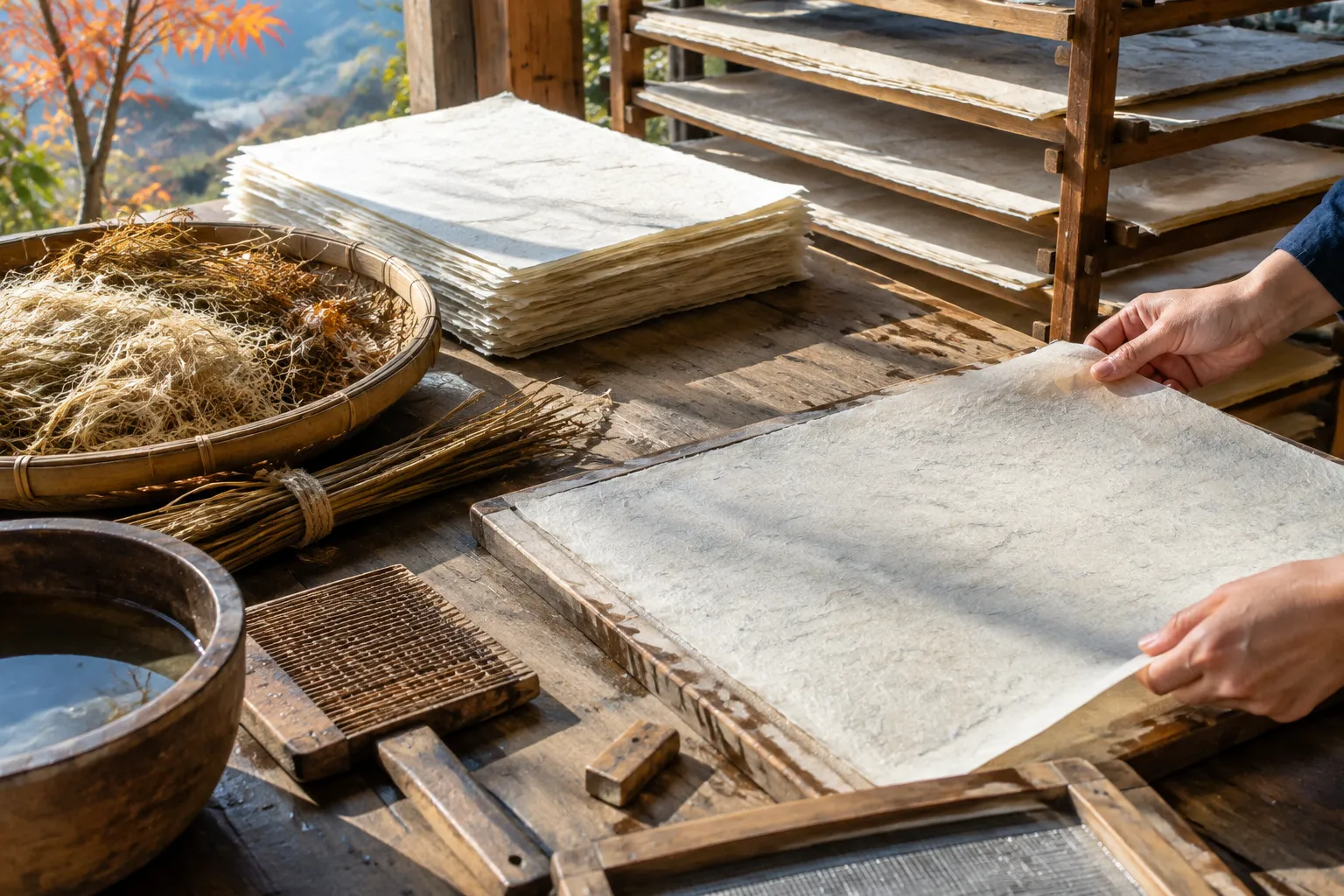
The production of Mino paper is basically done by hand-scooping. The raw material kozo is especially high quality and has been harvested in large quantities. Depending on the use, mitsumata and ganpi are also used. The traditional process involves manually loosening the fibers, dissolving them in water, and scooping thin, even layers. Recently, some machinery is used, but the basic techniques have remained unchanged since ancient times.
Mino City as a Production Area
The production area of Mino paper is around Mino City in Gifu Prefecture. There used to be about 5,000 paper-making households, but today the number has decreased to fewer than 30. Mino City is known as a traditional washi production area, and paper making continues there. The local climate and quality of raw materials support the quality of Mino paper.
Modern Value and Use of Washi Paper
After World War II, changes in lifestyle reduced the demand for washi paper, but its durability and beauty have been reevaluated, attracting attention both domestically and internationally. Since washi paper from over 1000 years ago is still preserved, it is suitable for cultural property preservation and special uses. Mino paper is still used in various situations today and plays an important role in conveying Japanese culture.
Explanation for Overseas Readers
Mino paper is a representative example of traditional Japanese hand-scooped washi paper, characterized by extracting fibers from plant bark. Unlike Western paper, which commonly uses wood pulp, washi is strong, long-lasting, and resistant to fading. Historically, the technique has continued since the Nara period and developed around Mino City, Gifu Prefecture. Although producers have decreased in modern times, the preservation of traditional techniques and the value of washi are being reconsidered. Travelers and buyers can visit workshops and museums in Mino City to learn about the paper-making process. It is important to provide brief explanations of washi names and raw materials to help understand the cultural background.
出典
- 歴史(2026年11月8日確認)
Related Links
Related articles
Honminoshi: Traditional Japanese Washi Paper with a 1300-Year History
Honminoshi is a washi…
Features and Appeal of Yokkaichi Banko Ware
Yokkaichi Banko Ware …